Field guide
What to measure, where to stand, and what each reading decides.
An audit is only as good as what was measured. You can text a client for a birth date afterwards; you cannot re-take a compass reading from your desk — and taking it wrongly, or from the wrong side of the building, changes every finding in the report. This is the whole site visit, in the order you do it.

01
The facing reading
Everything else is built on this one number. It sets the property’s chart, and a chart built from the wrong reading is wrong in every direction at once — not slightly, but completely.
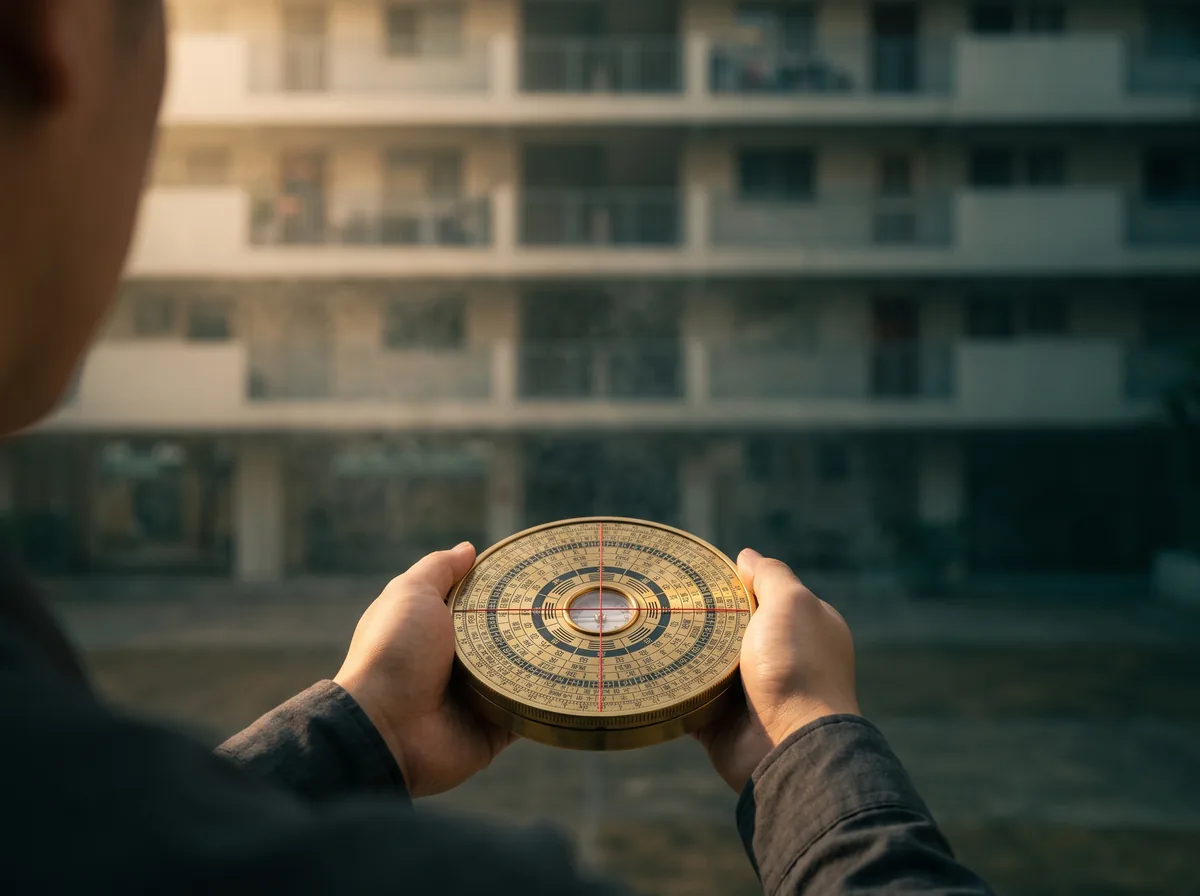
Stand outside, and stand back
Take the reading from outside the building, square on to the facing side, at about chest height with the compass held flat. Two metres clear of the wall is the working minimum — any closer and the building itself starts pulling the needle off.
What moves a needle
Steel reinforcing inside concrete, parked cars, metal gates and railings, lift shafts — and the phone in your own pocket. Almost every modern building has steel in it, which is why standing back matters far more than it looks like it should.
Take three, not one
A single reading cannot tell you it was wrong. Three, taken from different distances, either agree — and then you have evidence — or they do not, and that disagreement is itself worth knowing. The app keeps all three, averages them, and prints how far apart they were, so anyone reading the report can see how solid the chart’s foundation really is.
02
Which side you took it from
The judgement that changes the most, and the one most often left unwritten.
Four sides each have a fair claim: the main door, the most yang side (the busiest, brightest, most open one), the main view, and the front the block was designed around. In a house on its own land these are usually the same side. In a flat they routinely are not, and they can be ninety degrees apart.
No rule settles this for you, and the app does not pretend otherwise. What it does is make you say which side you picked, and keep that answer next to the reading — so the report can print it, and so another practitioner can argue with your reasoning instead of guessing at it.
Leave it blank and the report says so outright: the basis for the facing has not been recorded. That is deliberate. Nobody should act on a chart when they cannot tell what it was built from.
03
Magnetic declination
Your compass does not point at true north. The gap is small, and big enough to change the answer.
Write the readings down uncorrected, exactly as the compass gave them, and put the correction in its own box. The app applies it once, in one place, and shows you both the raw and the corrected figure. Do the sum in your head before typing and nobody can tell later whether it was corrected twice or not at all.
The correction differs from place to place and drifts a little every year, so it belongs to the address rather than to the app. Look it up for that address and that year — NOAA and the British Geological Survey both publish free calculators. Leave it blank and the report flags it as missing; it is never quietly treated as zero.
04
The main door
A second, separate reading — not the facing, and not a stand-in for it.

Stand in the doorway looking out, compass flat, sighting along the direction someone actually leaves by. This is the mouth of qi — where energy enters the home. It carries its own pair of stars, and it is checked against each person’s own favourable directions as well as against the chart.
The door reading and the facing reading often differ. That is useful information, not a mistake to be tidied away. Record both.
Note which sector the door sits in as well as the direction it points. A door sitting in the sector that holds this year’s Five Yellow — the most troublesome star of the year — matters whichever way it faces.
05
The stove, and the fire mouth
The measurement people get wrong most often in a home audit.

Two separate things are needed: where the stove sits (which sector of the home it stands in) and which way the fire mouth faces.
The fire mouth is read from the knobs — the direction the energy is drawn in from — not from the front of the cooker, and not from the way the cook stands. On many built-in hobs the knobs do not face the cook at all. Look at the actual appliance rather than assuming.
For an induction or electric hob, the same thinking applies to the control panel and where its power comes in. Write down what you can actually see, and note what kind of appliance it is. A guess written down as a measurement is worse than leaving it blank.
06
Rooms, and the twenty-four slices
Why “the bedroom is in the West” is not precise enough to act on.
The circle around a home is cut into eight sectors of forty-five degrees each — these are the palaces. Each palace is cut again into three narrower slices of fifteen degrees — these are the mountains, twenty-four of them in all. Two bedrooms can both be “in the West” while sitting in different mountains that read completely differently, which is why this app works in all twenty-four rather than the eight.
While you are there, note every slice each room touches, not just the one its middle sits in. A large room genuinely crosses several fifteen-degree slices, and half a bedroom sitting in a troubled one is something the coarser eight-sector view simply cannot see. In a flat, rooms straddling a boundary are the normal case, not the exception.
Note who sleeps in which bedroom while you are there. It costs nothing at the time, and it is what connects each person’s own favourable directions to real rooms.
07
The external surroundings
Reading the shape of the land and buildings around you — what practitioners call form school. What is outside often matters more than anything inside.
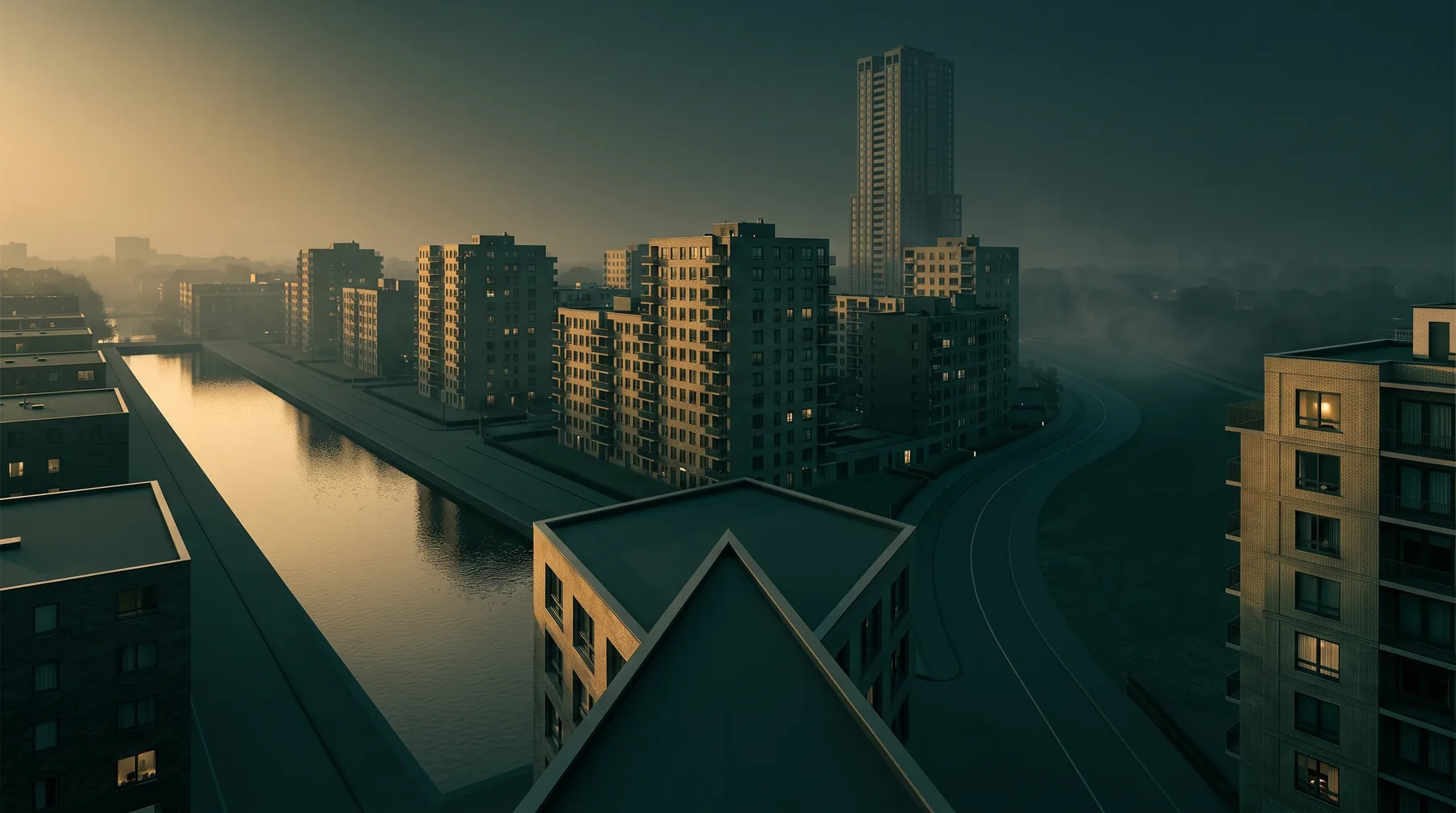
Walk the outside and note each thing you find together with a compass reading to it. Without a reading there is no way to tell which part of the home it affects, and anything that cannot be placed cannot be assessed — it will not appear in the report at all.
- Roads — which way traffic runs, and whether one points straight at the building.
- Water — still or moving, and which way it moves.
- Sharp corners and edges pointing at the unit — the corner of the next block is the usual culprit.
- Taller buildings — what looms over the property, and from which side.
- Open ground, and what sits behind — having solid support behind matters as much as having openness in front.
Photograph each one as you go. By the time you sit down to write you will not remember which corner pointed where — and a reading with no photograph behind it is hard to defend to a client asking why you are recommending a change.
08
The floorplan
One photograph, taken properly, saves an hour of fiddling later.
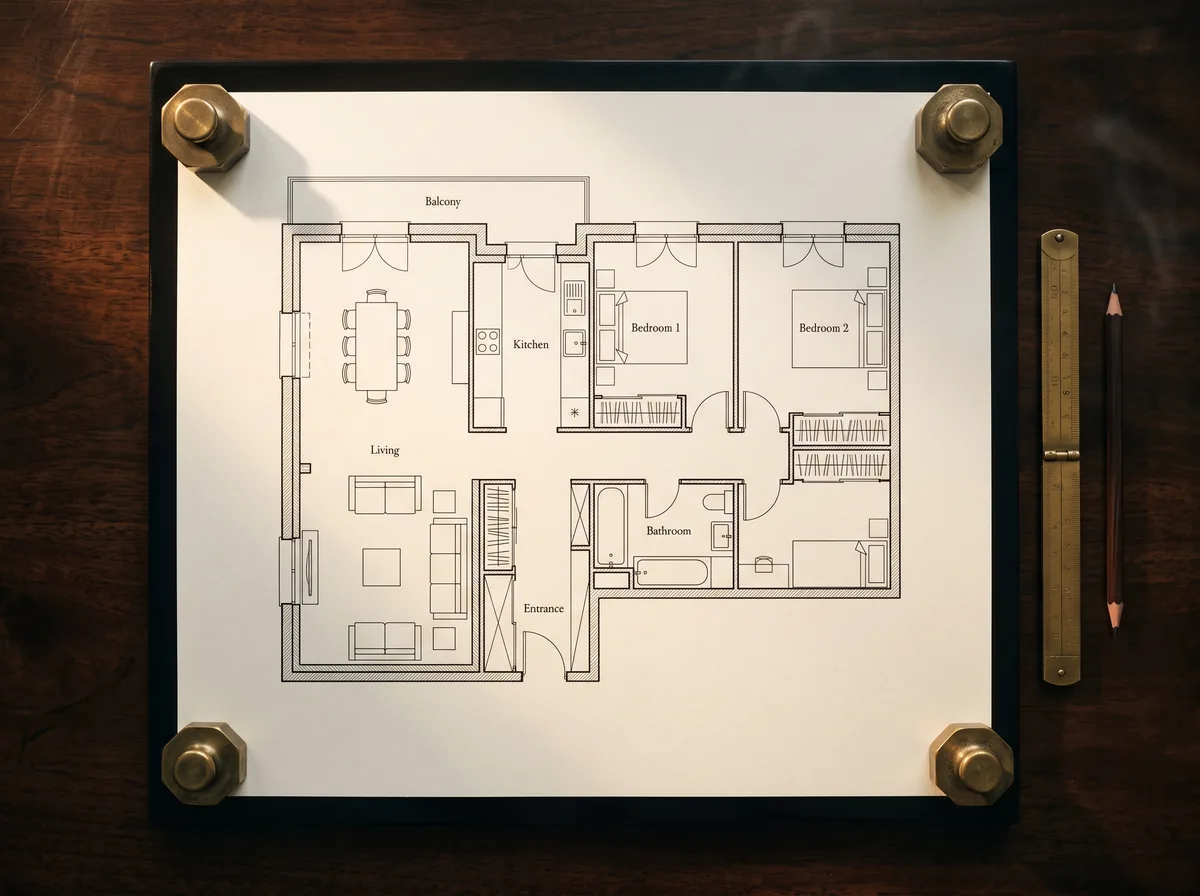
Lay the plan flat, weigh the corners down, and shoot from directly overhead with the whole outline inside the frame. Angle is the enemy here: photograph a plan from the side and it tapers, and a tapered plan pushes rooms into the wrong sector once the overlay goes on.
Get the whole outline in, including balconies and any corner that cuts into the shape. A corner left out of frame is a whole sector left out of the home — and a missing sector is exactly the kind of thing the report is looking for.
Keep glare off the lines, and hold the sheet parallel to the camera rather than to the table you are leaning over.
09
Gathered before the visit
You can ask for these afterwards — but the visit goes faster with them already in hand.

The building
The year it was built, or of the last full renovation. This sets the property’s period — the twenty-year era it belongs to — and only a gut renovation that stripped it back to roof and ceilings counts. You also want the full address and which floor the unit is on.
The occupants
Full name, role in the household, gender and date of birth for everyone who will live there; which bedroom each one uses; and who the main earner is. Birth dates give each person their Gua number — their own favourable and unfavourable directions — and the birth chart used for choosing dates.
Anyone born on or near 立春 Li Chun — the start of February — needs a time of birth too. The Chinese year turns partway through that day, so a few hours either side changes the Gua number, and with it every personal direction.
Take this with you
The short version. Everything here either cannot be got without going back, or costs nothing to capture while you are standing there.
On site — you cannot get these later
- Three facing readings, uncorrected, from different distances
- Which side of the building you took them from, and why
- Main door reading, standing in the doorway looking out
- Which sector the main door sits in
- Where the stove sits, and which way its knobs face
- Every 15° slice each room touches
- Who sleeps in which bedroom
- Everything around the property, each with a compass reading
- Photographs of the surroundings
- Which floor the unit is on
Paperwork and details
- Floorplan, shot straight on, whole outline visible
- Year built, or of the last full renovation
- Full address
- How far off true north the compass reads there
- Names, roles, genders and birth dates
- Time of birth for anyone born near 立春
You need surprisingly little to start: one facing reading and the year built will produce the chart on their own. Everything else widens what can be said. The report names whatever was missing rather than quietly working around it.